

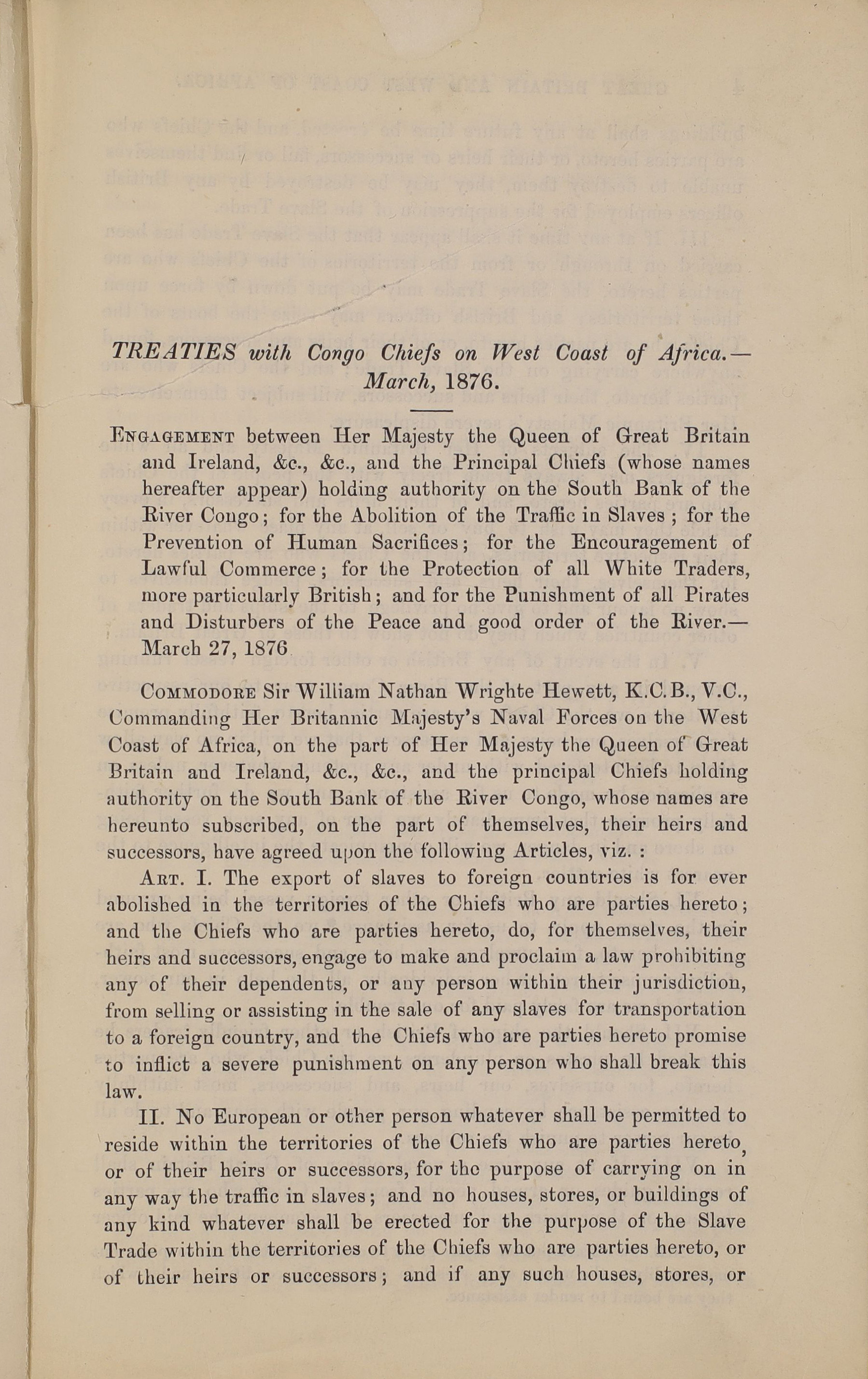
Our latest “Document of the Week” was chosen by our Editor, Nishah Malik. In an effort to eradicate the slave trade at its source, throughout the mid- to late 1800s, British naval officers negotiated anti-slavery treaties with African leaders. This Foreign Office document, dating from August 1876, records treaties signed between Commodore Sir William Hewett and rulers based along the Congo River.
On 27 March 1876, Hewett negotiated a treaty comprising eleven articles covering the slave trade, commerce, security, and relations between British subjects and local rulers. Article I committed the participating chiefs to abolish the export of enslaved people from their territories and to prohibit involvement in the trade. Article II prohibited Europeans and other foreigners from residing in the chiefs’ territories for the purpose of conducting the slave trade, while also addressing buildings used for this purpose.
Articles III–V focused on suppressing the slave trade, promoting free trade, and protecting shipping. These clauses allowed British officers to act against slave traders and gave British and other foreign merchants access to the chiefs’ territories.
Articles IX and X addressed human sacrifice and permitted Christian missionaries to reside in the territories so as to preach and to provide instruction in useful occupations. The treaty was, however, about more than humanitarian reform. Articles VI–VIII outlined the responsibilities of local chiefs, such as assisting stranded British vessels in return for fair payment. Rulers were also required to protect traders from pirates and robbers, and to provide British naval officers with guides or armed escorts upon request.
Together, these articles helped safeguard maritime trade and strengthen British commercial and naval influence along the Congo River. Ultimately, this treaty highlights the complex relationship between Britain’s campaign against the slave trade and its growing commercial and political influence across central Africa.
Where to find this document
This document is part of our new collection, The Slave Trade, c. 1830–1893: British Foreign Office Confidential Print. Comprising over 31,000 images from Foreign Office files at The National Archives (UK), the collection includes diplomatic correspondence and reports sent between London and British officials, agents, and naval officers working across the world. It offers unrivalled insights into official attitudes towards slavery and the formation of policies relating to formerly enslaved people.
Visit the collection page to learn more.