Germany, 1920–1969: British Foreign Office Confidential Print Overview

  • Home
  • Collections
  • Germany, 1920–1969: British Foreign Office Confidential Print
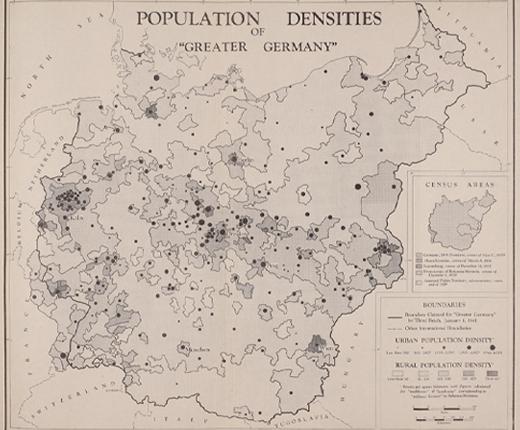
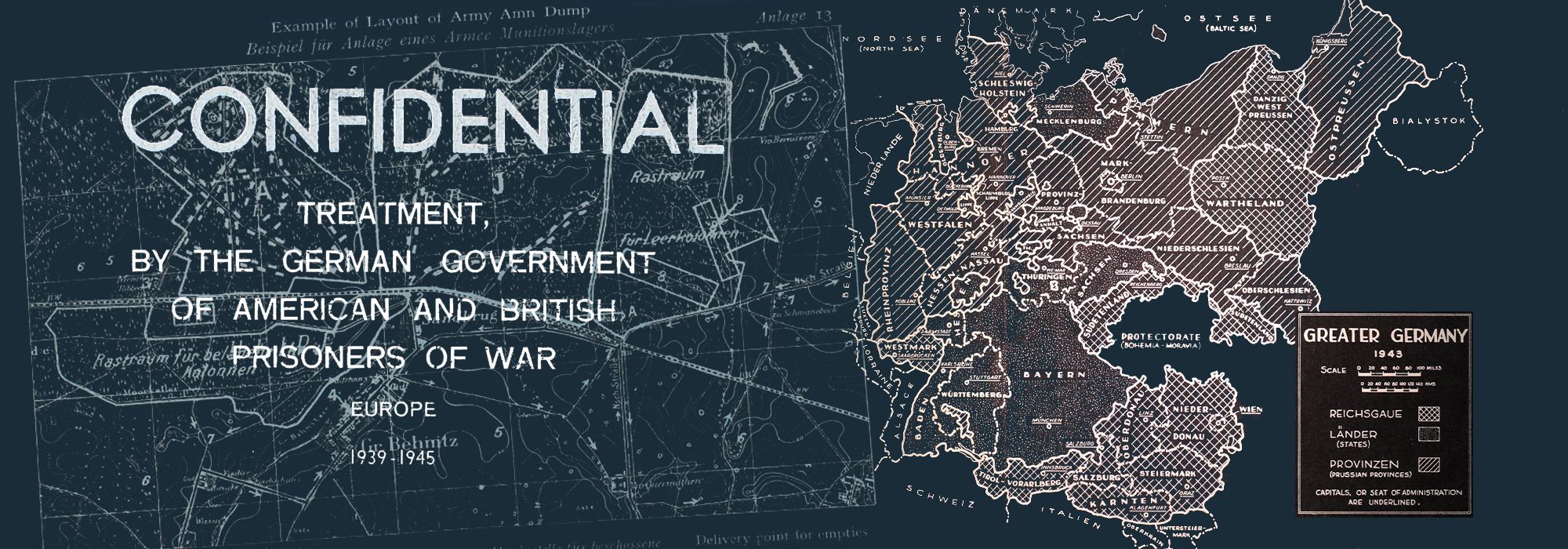
A map of "Greater Germany, 1943", overlayed with text reading "Confidential Treatment, by the German Government of American and British Prisoners of War, Europe, 1939-1945".

Revolution, dictatorship, war, and turmoil in twentieth-century Europe

. . . the question of Anglo-German relations is of the first importance for our two countries and for Europe.
Neville Chamberlain,  30 September 1938.

Access the full collection

Access the full archive of Germany, 1920–1969: British Foreign Office Confidential Print.

Institutional Free Trial

Start your free trial 

Register for a free 30-day trial of Germany, 1920–1969: British Foreign Office Confidential Print, for your institution.

Institutional Sales

Visit Sales Pagesell

For more information on institutional access, visit our sales page.

Already have a license? Sign in.

Explore how British officials made sense of—and navigated—the dramatic changes which Germany experienced in this critical fifty-year period.

Text reading Diplomatic Documents dealing with Anglo-German Relations (November 1925 - March 1939). The coat of arms of the United Kingdom features above. It is marked confidential in the top right.

Comprising over 55,000 images sourced from The National Archives (UK), this collection surveys Foreign Office material relating to Germany and its nearest neighbours. The collection contains a wide variety of documents, all of which were selected by the Foreign Office for inclusion in its Confidential Print series, on the basis of their significance.

The twentieth century was a time of great change and turmoil for Germany. In just fifty years, it experienced post-war revolution, an experiment with liberal democracy, the rise of Hitler and the Nazi Party, the establishment of a brutal dictatorship, the horrors of war and genocide, occupation by foreign powers, and division into two ideologically-opposed states.

Throughout this period, Britain’s fate was closely entwined with Germany’s. The two countries shared a number of important similarities and, as two of the most powerful states in Europe, their relations could have serious implications for the continent and beyond. During the two world wars, they were bitter adversaries, but at other times, they enjoyed periods of peaceful and friendly co-operation.

The government files in this collection reveal how well-informed British officials and diplomats perceived, interpreted, and responded to Germany throughout much of this critical period, offering an unrivalled English-language insight into the frequent and significant changes which Germany experienced during that time.

Contents

Germany, 1920–1969: British Foreign Office Confidential Print...

Revolution, dictatorship, war, and turmoil in twentieth-century Europe

Discover 
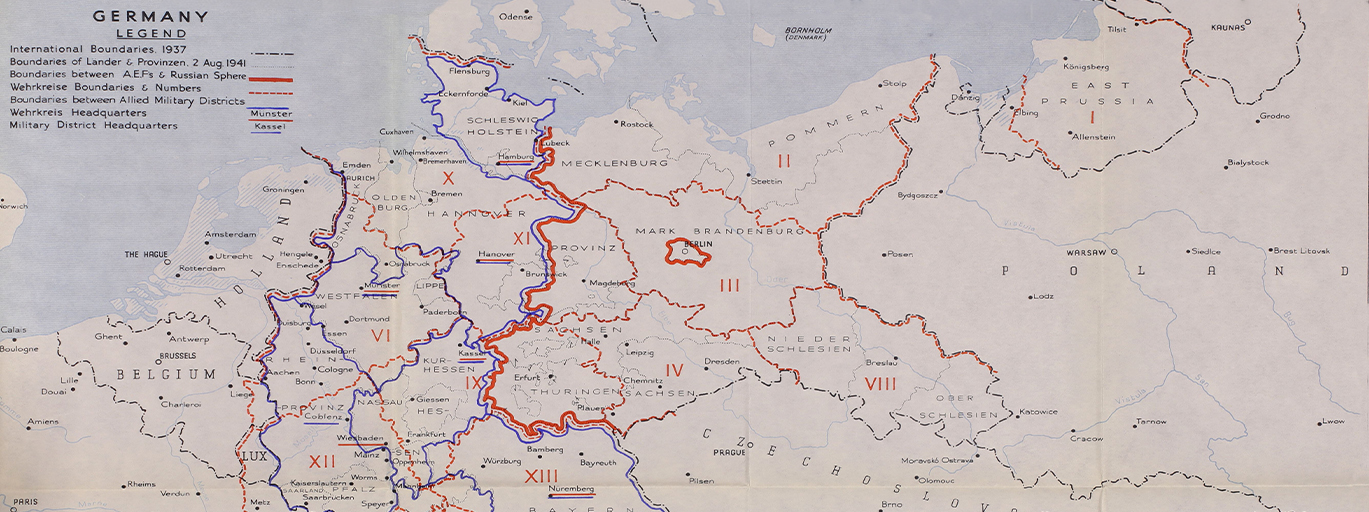
A map of Germany with coloured lines marking different boundaries. Listed in the top left, these are "International Boundaries, 1937", "Boundaries of Lander and Provinzen, 2 August 1941", "Boundaries between A.E.F's and Russian Sphere", "Wehrkreise Boundaries and Numbers", £Boundaries between Allied Military Districts", "Wehrkreis Headquarters", and "Military District Headquarters".

Highlights

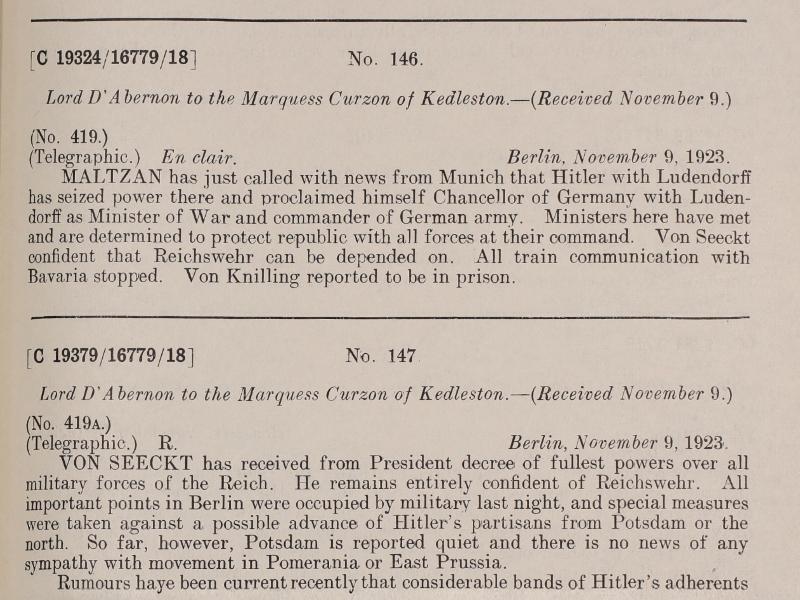
Licensed to access Correspondence regarding the hyperinflation crisis (FO 425/543)

The Germany which emerged from the First World War was a fragile democracy, beset by political instability, social and cultural upheaval, a hostile international community, and severe economic strife. One of the most notable examples of the latter was the hyperinflation crisis of 1923, whereby Germany’s currency became essentially worthless. British officials monitored this volatile situation carefully. 

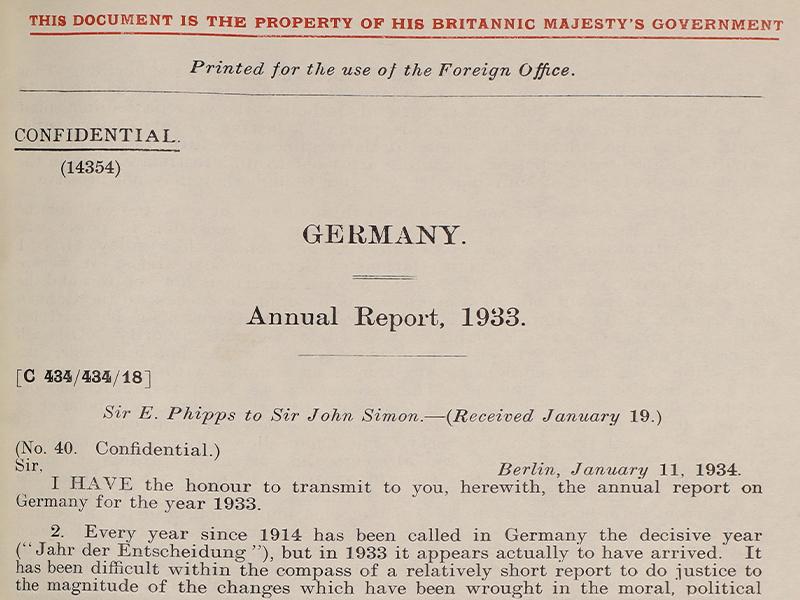
Licensed to access Annual report on Germany for 1933 (FO 425/515)

1933 was significant for Germany, and the wider world. On 30 January, Adolf Hitler was appointed chancellor and by the end of the year he and the Nazi Party had built an unassailable dictatorship. This annual report, produced by the British Embassy in Berlin, provides a detailed account of these seismic political changes and their wider impact.

Licensed to access Correspondence concerning Central Europe, 1938–1939 (FO 404/27)

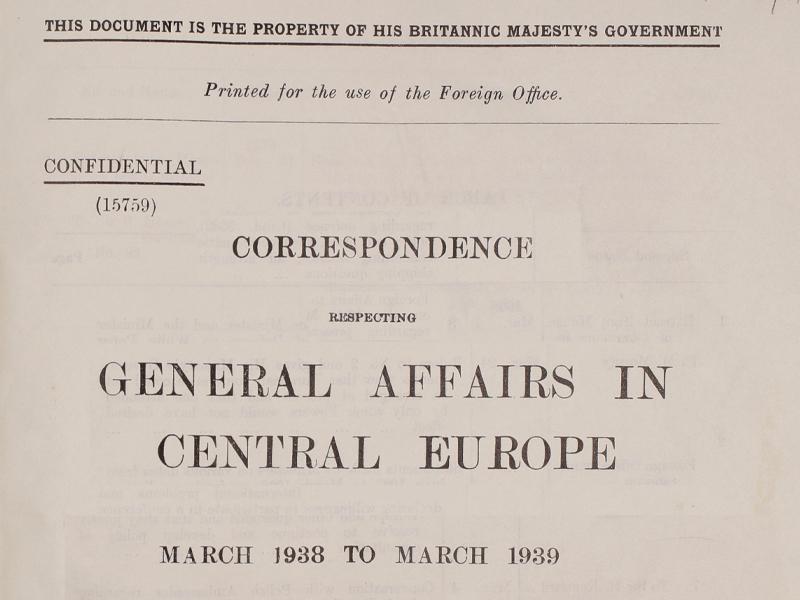
The documents in this collection offer valuable insights into the fraught diplomacy which preceded the outbreak of the Second World War. Of particular interest is the frantic correspondence between British officials in Germany and Czechoslovakia, and with civil servants back in London, as war loomed and was then narrowly averted during the Sudeten Crisis of 1938. 

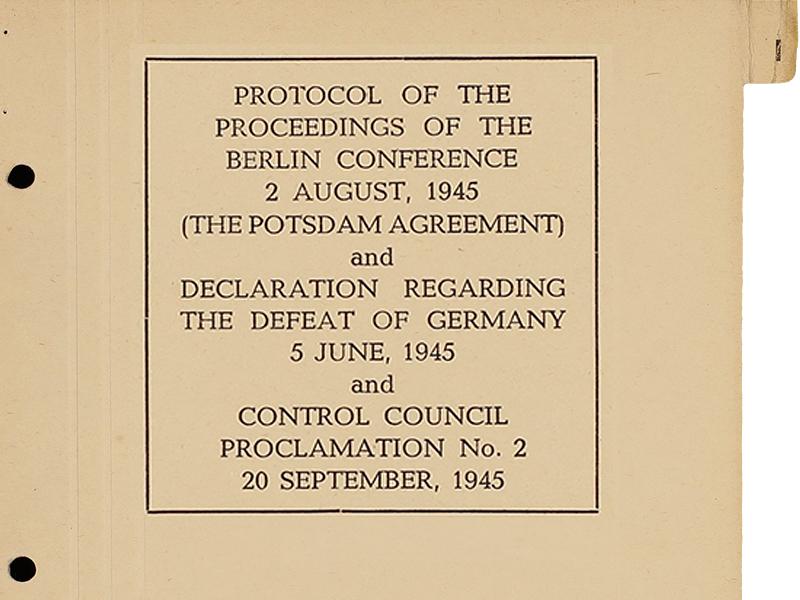
Licensed to access Declaration regarding the defeat of Germany (FO 425/582)

Once the Nazi regime had been defeated in 1945, German territory was divided up and occupied by the four principal Allied nations. The occupiers took over responsibility for delivering all the day-to-day functions of government while also seeking to rebuild a peaceful, democratic, and prosperous Germany. Documents in this collection explore the key political foundations which underpinned this process.

Insights

  • While this collection only spans fifty years—from 1920 to 1969—it documents some of the most significant events in modern German, European, and even world history. It is particularly valuable as an account of the downfall of the Weimar Republic, the rise and rule of the Nazi dictatorship, the horrors of the Second World War and the Holocaust, and the Cold War microcosm that partitioned Germany became. These contemporary accounts are therefore of great value to historians seeking to uncover the complex realities of these important and controversial developments.
  • The types of document within this collection are quite varied. Some of the richest material comes from reports sent by British ambassadors (and other senior consular staff) in Germany back to the Foreign Office in London. These officials were usually well-connected and perceptive and the information that they provided shaped British foreign policy. In addition to these reports, the collection also includes a number of important diplomatic documents, such as the proceedings of the Locarno Conference of 1925 and the establishment of relations with the Federal Republic of Germany in the 1950s.
  • Germany’s geography has had a vital influence upon its history. Situated in the heart of Europe, Germany’s affairs have had a huge effect upon—and have, in turn, been affected by—developments in its closest neighbours. To more adequately explore these events and trends, this collection also includes British Foreign Office files relating to Austria, Czechoslovakia, Hungary, and Poland, especially during the Nazi period when these nations were occupied and partially absorbed into the Greater German Empire. In this way, it is possible to better situate Germany within its wider, continental context.
  • One particular strength of this collection is the number of files relating to the British occupation of Germany at the end of the Second World War. While this began as a military effort to ensure no resurgence of German aggression after 1945, it rapidly became a much more complicated undertaking. British authorities took responsibility for all areas of administration within their occupation zone, from education and religious affairs to public welfare and prisons. Consequently, these sources offer fascinating insights into this peculiar episode in modern Anglo-German relations.
lock_open

Unlock Historical Research for Your Institution

Provide your students and researchers with direct access to unique primary sources.

A black and white image of POWs at a re-education camp.

Licensed to access Building a New Germany: Denazification and Political Re-education, 1944–1948

1944   1948
The National Archives (UK) logo
A barbed wire fence in the foreground, running parallel to a watch tower

Licensed to access Prosecuting the Holocaust: British Investigations into Nazi Crimes, 1944–1949

1944   1949
The National Archives (UK) logo
Coming soon

Licensed to access British Foreign Office Confidential Print and International Organisations, 1923–1969

1923   1969
The National Archives (UK) logo
Coming soon

Licensed to access Italy 1832–1969: British Foreign Office Confidential Print

1832   1969
The National Archives (UK) logo
Back to Top