
Italy 1832–1969: British Foreign Office Confidential Print Coming Soon Overview

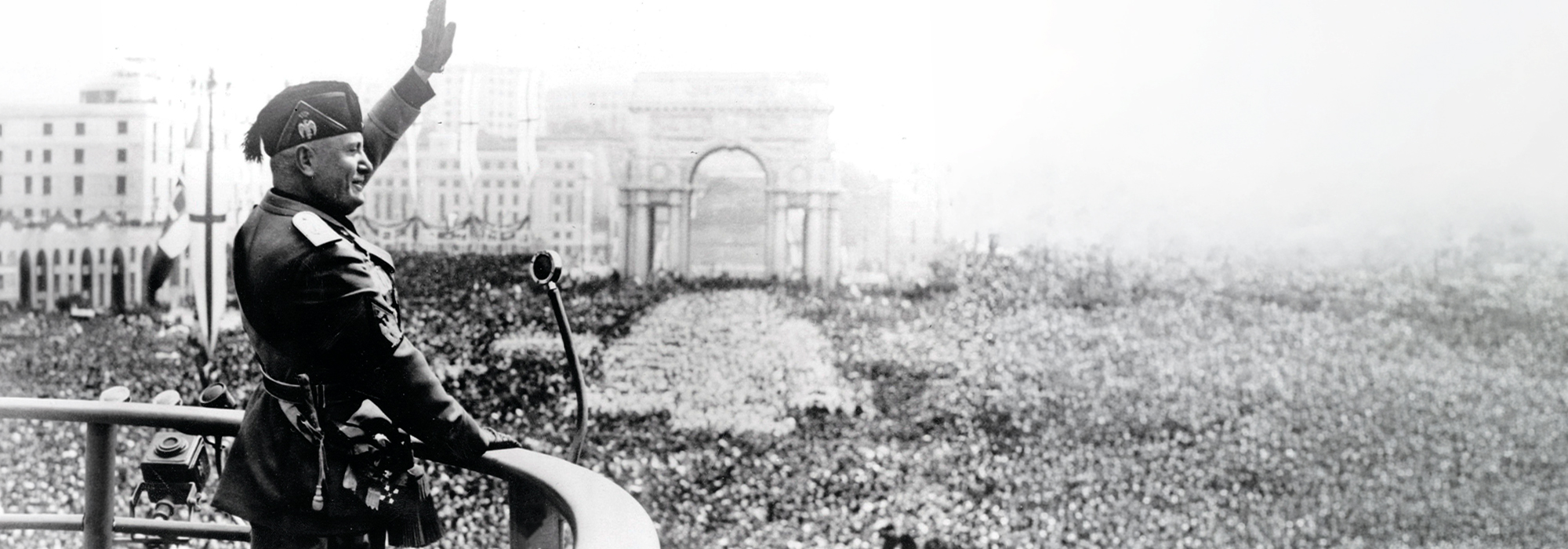
Unification, war, the papacy, fascism, and national identity through British eyes
Receive Updates on Release
This collection is coming soon. However, you can register for a free trial here and obtain access as soon as it is released.
Register Institutional Interest
Register InterestExplore how British officials made sense of—and navigated—the dramatic changes which Italy experienced through the nineteenth and twentieth centuries.
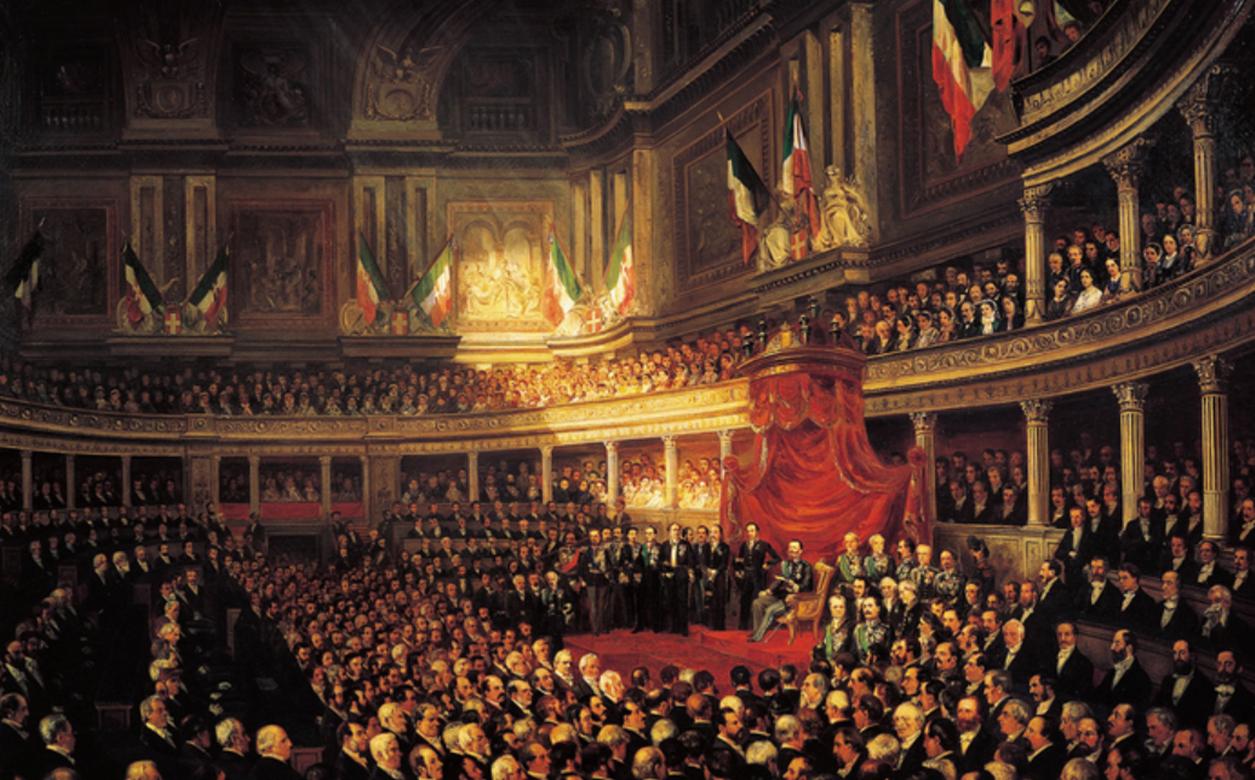
Few European countries have experienced as much upheaval and transformation in the last two centuries as Italy. Throughout this period, Britain’s fate has often been entangled with Italy’s in complex ways—as allies, rivals, and outright enemies. This collection comprises 44 items, including diplomatic correspondence and reports, amounting to over 16,000 pages. It offers unrivalled insights into the numerous changes and reconfigurations which Italy experienced in this period.
Topics covered include the revolutionary activity of 1848, the unification campaigns of the 1850s and 1860s (and Britain’s role therein), the emergence of Italian fascism and the establishment of Mussolini’s dictatorship, as well as the role of Italy in the two world wars. Reports from British envoys to the Holy See also document key developments within the organisation and outlook of the Roman Catholic Church throughout this tumultuous era. This collection will appeal to those interested in the history of Italy, modern political and religious thought, war and diplomacy, as well as economics, international relations, and political science.
Register InterestContents
Italy 1832–1969: British Foreign Office Confidential Print...
Collection release coming soon...
Register Interest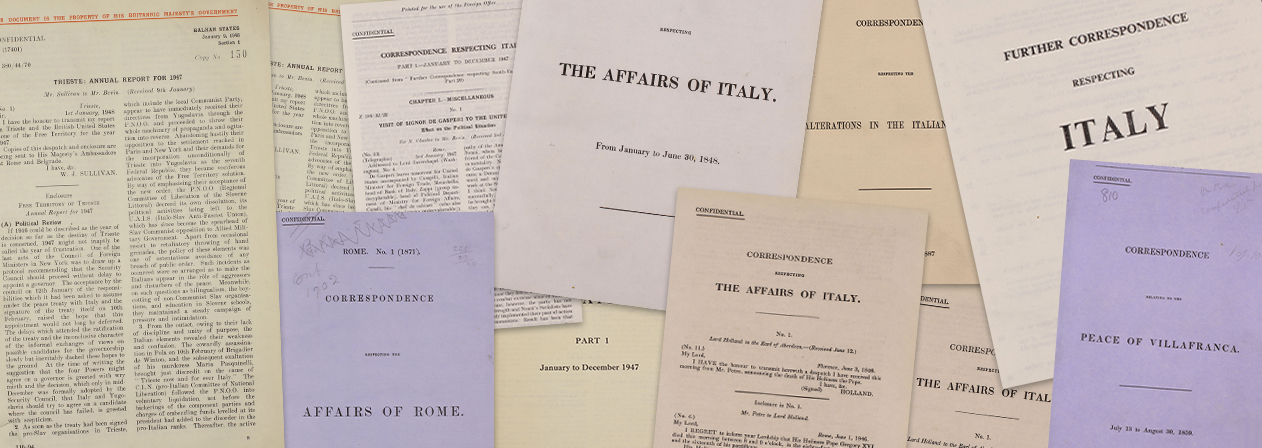
Highlights
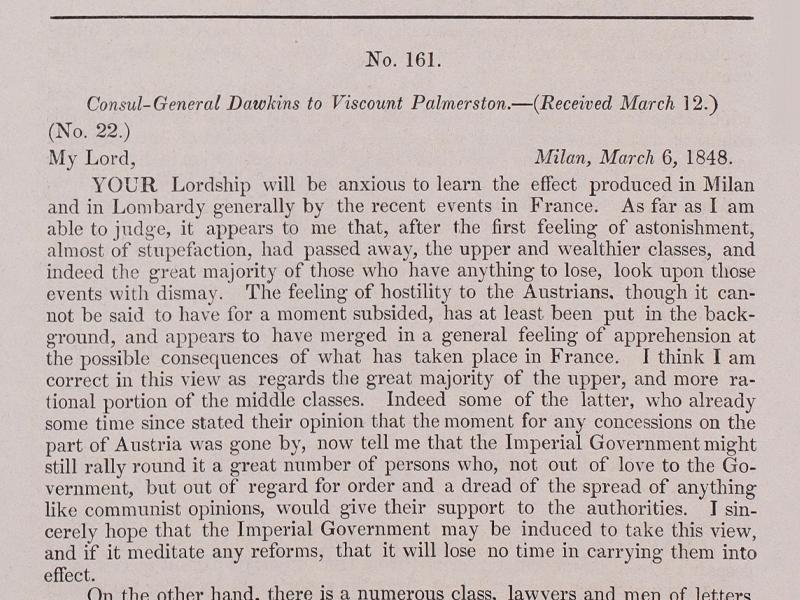
Licensed to access Five Days of Milan (FO 482/14)
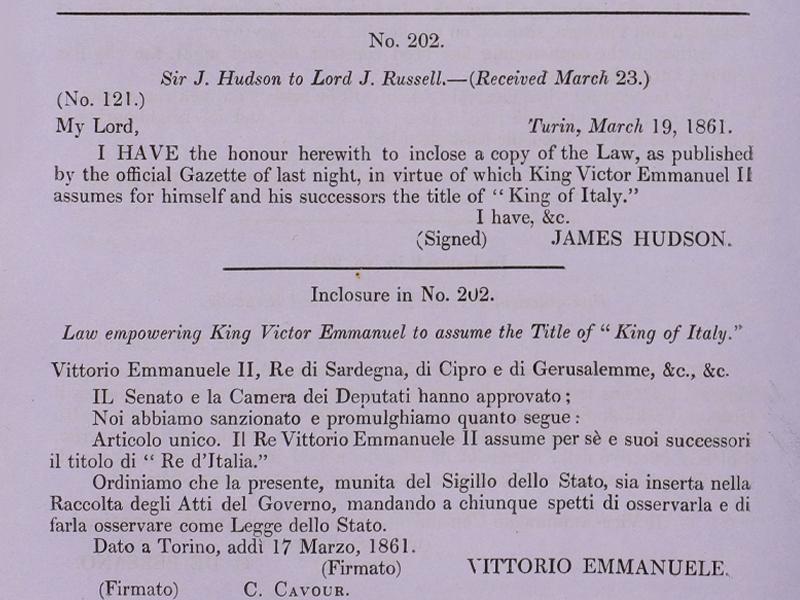
Licensed to access Unification of Italy (FO 482/19)
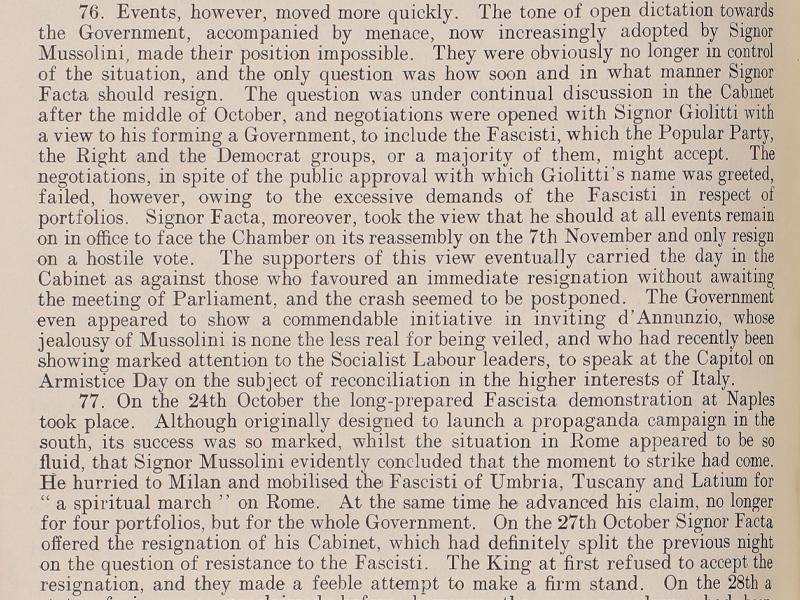
Licensed to access The March on Rome (FO 482/32)
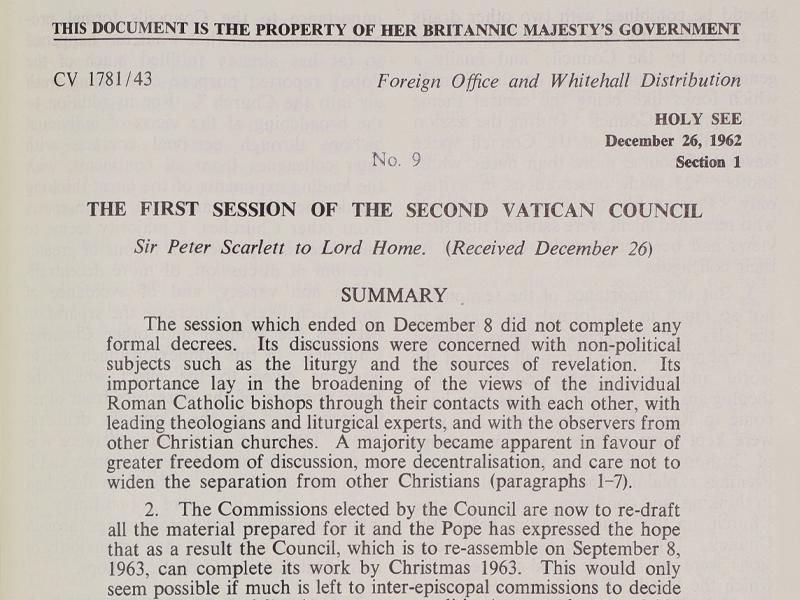
Licensed to access The Second Vatican Council (FO 482/37)
Insights
- In 1847, the powerful Austrian diplomat, Klemens von Metternich, wrote that “Italy is a geographical expression”, by which he meant that there was no such thing as a country of Italy, only an area on the map occupied by many different kingdoms, duchies, and imperial possessions. This statement was opposed vigorously by Italian nationalists who strove, and eventually succeeded, in creating a unified nation by the 1870s. This was achieved through a mixture of military conflict, political manoeuvring, and international intervention, including by the British, who supported Italian unification.
- Unified Italy sought to become a major player in European politics. Yet the fledging state struggled to catch up with the great empires of Britain, France, Austria-Hungary, and Germany. Italy entered the First World War in 1915 on the side of the Entente, but victory did not deliver all that the ambitious state had hoped. This disappointment led, in part, to the rise of Mussolini, who turned Italy into the first major Fascist state in Europe, embarked on grandiose colonial adventures, and eventually drew the country into the Second World War, with disastrous results.
- From its spiritual home in Rome, the Catholic Church has long had a powerful influence over Italian, and broader European, affairs. In the nineteenth century, large swathes of central Italy constituted the Papal States. By 1871, these had been wrested from the pope’s control and integrated into the Italian nation. This resulted in a fraught relationship between the papacy and the new state, a period during which Pius IX and his successors promulgated the idea of the pope as the “prisoner of the Vatican”. In 1829, the independence of the Vatican City as a micro-state was affirmed via the Lateran Treaty. Since 1914, Britain has maintained direct diplomatic relations with the Holy See. The records generated by this relationship form a key part of this collection.
- The Confidential Print series offers some of the most fascinating British Foreign Office material. It is of extremely high value to scholars and students situated within a range of academic fields. Significantly, these files represent the reports and correspondence which the Foreign Office deemed most important to preserve for posterity. In many cases, the material is clearly printed and organised chronologically, often in volumes which feature detailed contents pages, making it simple to navigate. As such, this collection offers an easy entry point into this rich and detailed archival content.
Coming soon...
Unlock Historical Research for Your Institution
Provide your students and researchers with direct access to unique primary sources.