
International Organisations, 1923–1969: British Foreign Office Confidential Print Coming Soon Overview

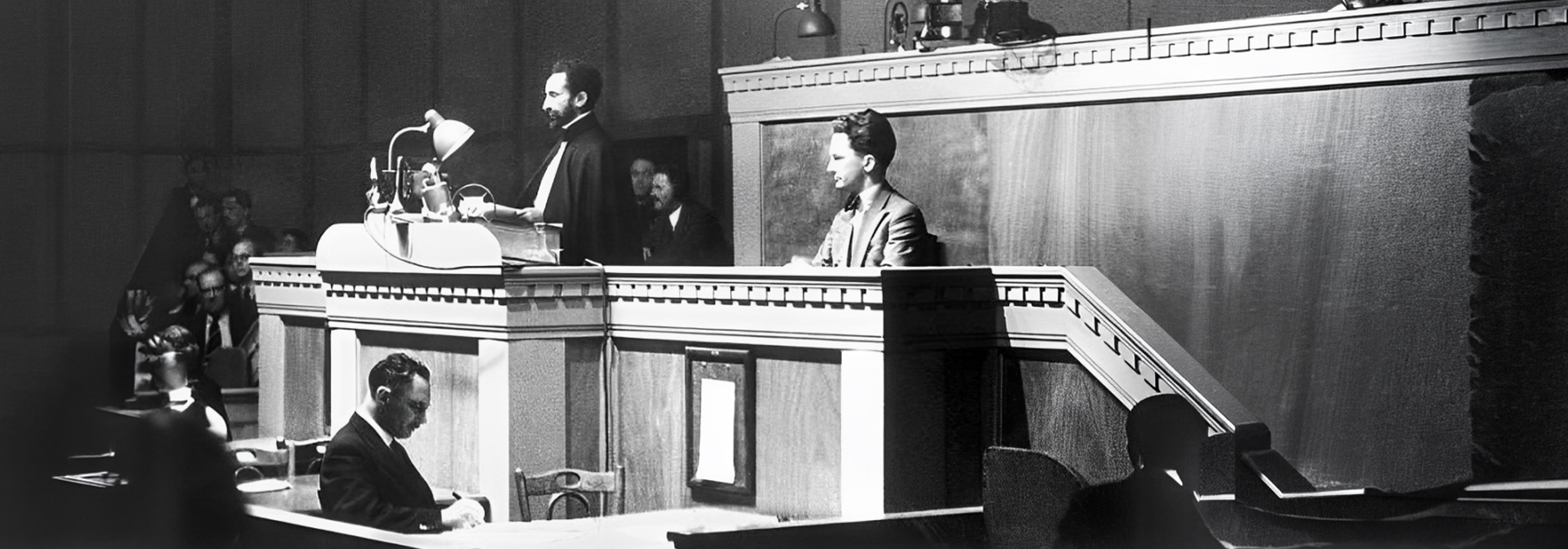
The transformation of international relations in the twentieth century
To unite in order to live and prosper; that is the imperious necessity which henceforth confronts the nations of Europe.M. Briand, Memorandum on the Organisation of a System of European Federal Union, 1 May 1930, FO 411: Further Correspondence Respecting the League of Nations, Part XI, January to June 1930,
Receive Updates on Release
This collection is coming soon. However, you can register for a free trial here and obtain access as soon as it is released.
Register Institutional Interest
Register InterestExplore Britain’s relationship with the League of Nations and the United Nations as those organisations fought to create a more peaceful world
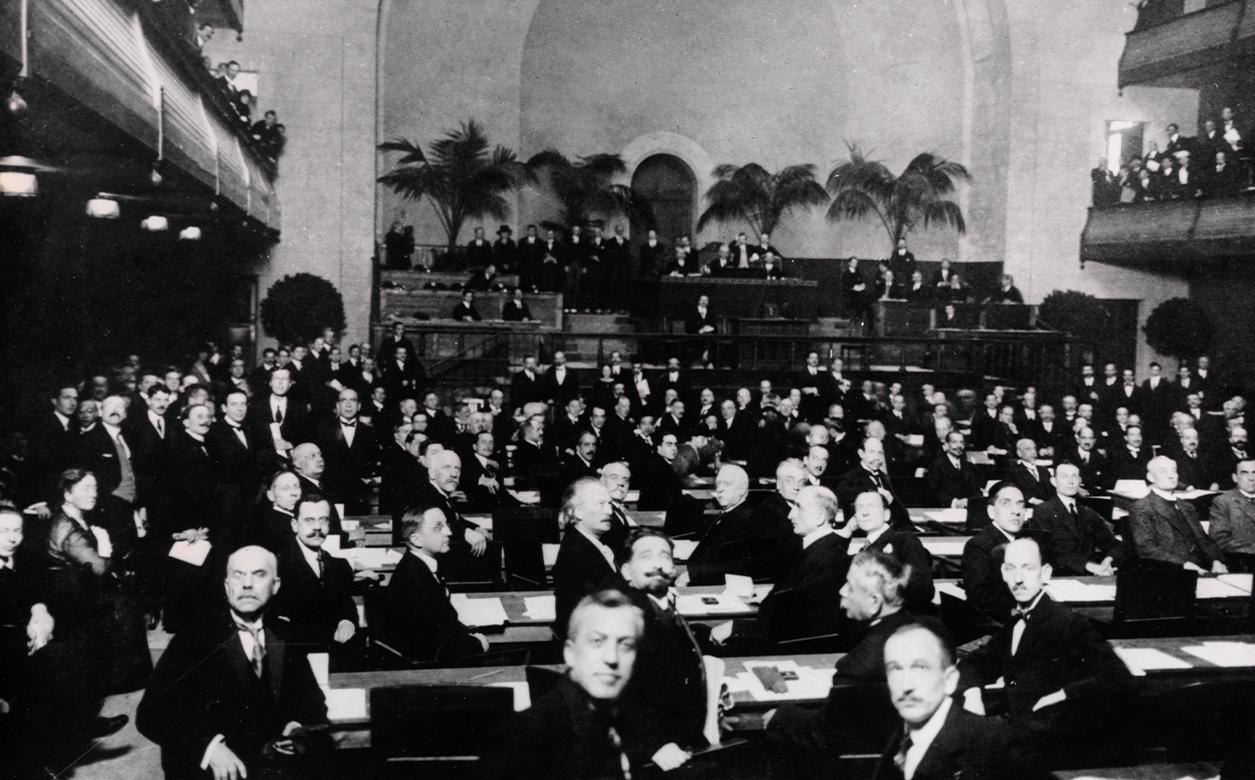
After the First World War, the victorious Allies sought to create an international system which would resolve disputes between states through diplomacy and thus avert another major conflict. This took the form of the League of Nations, which was established in 1920, but which ultimately failed to avert the outbreak of the Second World War twenty years later. The League's successor, the United Nations (UN), shared many of its noble and ambitious goals, but has also faced widespread criticism. Britain played a key role in the establishment and leadership of both of these organisations.
The collection comprises 41 items, many of which are bound volumes in excellent condition, amounting to over 10,500 pages. These include diplomatic correspondence and reports that supply unrivalled insights into Britain’s role in, and relationship with, the League and the UN. The sources likewise provide a wide-ranging summary of all manner of major world affairs during this period. This collection will be of value to those interested in international relations and key historical themes, such as empire, war, and peace. It will also appeal to students, educators, and researchers situated within the fields of political science, economics, and philosophy.
Register InterestContents
International Organisations, 1923–1969: British Foreign Office Confidential Print...
Collection release coming soon...
Register Interest
Highlights
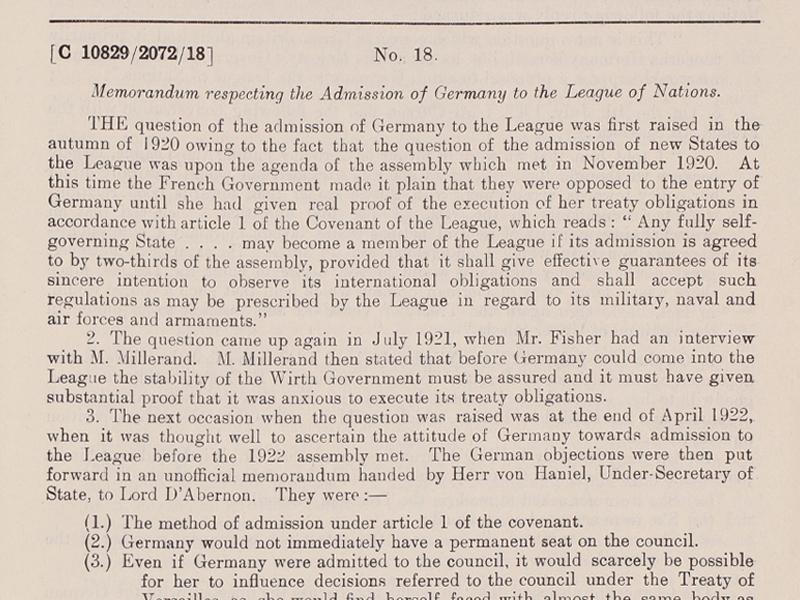
Licensed to access Admission of Germany to the League of Nations (FO 411/1)
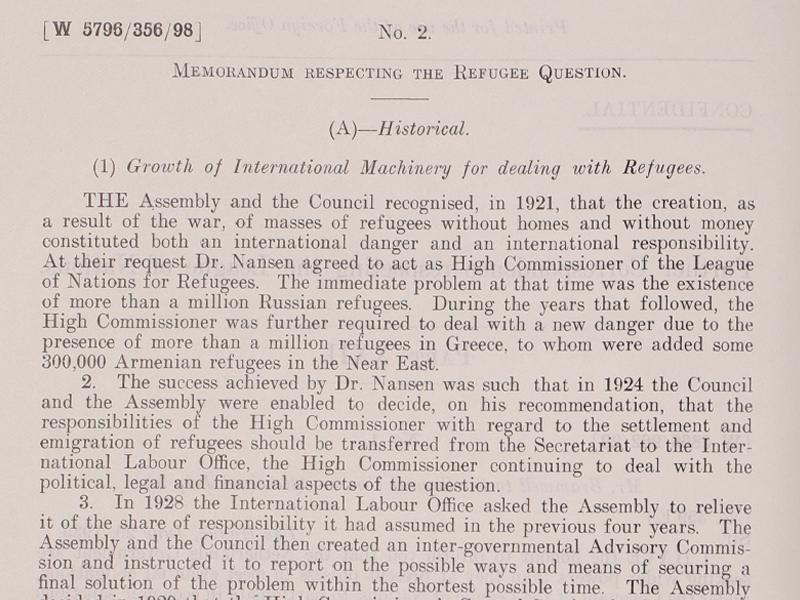
Licensed to access Memorandum Respecting the Refugee Question (FO 411/19)
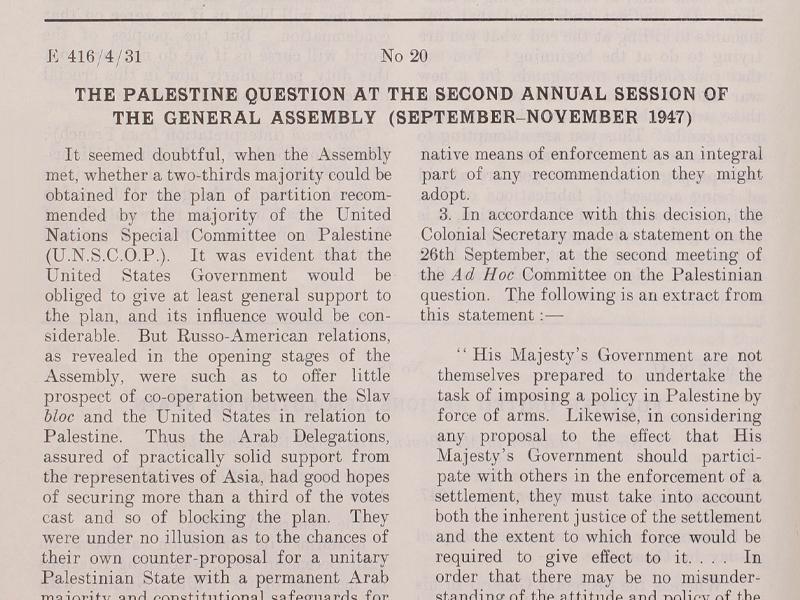
Licensed to access The Palestine Question (FO 502/1)
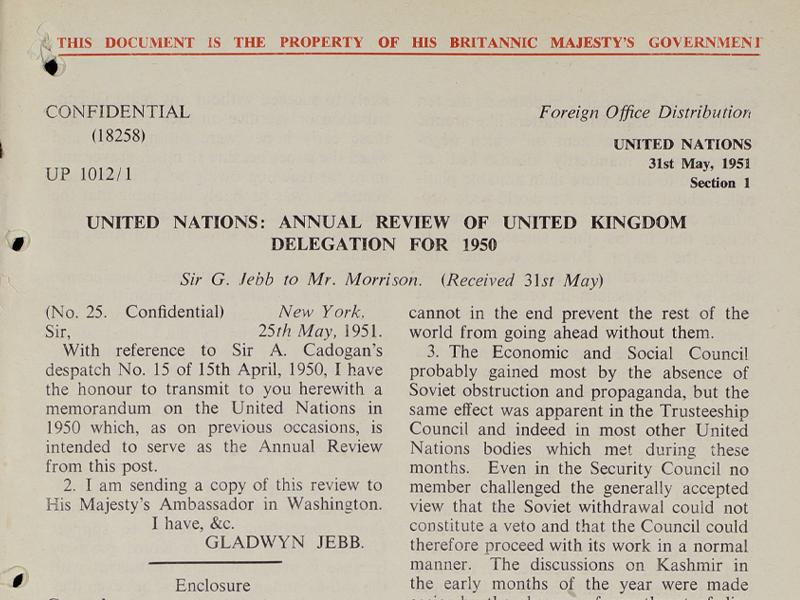
Licensed to access United Nations Annual Review for 1950 (FO 502/13)
Insights
- The League of Nations and the United Nations were products of the wars which preceded them. In each case, the victorious powers sought to create an international system which would help to avert future large-scale conflicts, while also maintaining their own dominance. For example, the League issued mandates which preserved and expanded the British and French empires, while the United Nations crystallised the power of the five principal Allies—Britain, China, France, the Soviet Union, and the United States—as permanent members of the Security Council.
- Both organisations have been subject to extensive criticism during their lifespans. The League of Nations lacked important American backing and had no clear measures to compel states to adhere to its principles. During the 1930s, it failed to restrain Japan’s actions in Manchuria, Italy’s invasion of Abyssinia, or Nazi Germany’s expansionism in Europe. The UN has faced similar critiques, and has often seen major powers merely sidestep its processes to pursue their own agendas, without penalty. Examples from the period covered here include American military action in Vietnam or Soviet repression in Eastern Europe.
- In spite of these shortcomings, the League of Nations and the United Nations have achieved much and their impact upon international relations since 1920 is considerable. The League was successful in providing a much-needed forum for settling border disputes following the First World War. It also advanced the cause of national self-determination and established widely-adopted measures for protecting labour. The UN has perhaps enjoyed its biggest successes away from top-level diplomacy, in areas such as peacekeeping during civil wars, handling refugee crises, providing humanitarian aid, and improving global education, healthcare, and human rights.
- The Confidential Print series offers some of the most fascinating British Foreign Office material. It is of extremely high value to scholars and students situated within a range of academic fields. Significantly, these files represent the reports and correspondence which the Foreign Office deemed most important to preserve for posterity. In many cases, the material is clearly printed and organised chronologically, often in volumes which feature detailed contents pages, making it simple to navigate. As such, this collection offers an easy entry point into this rich and detailed archival content.
Coming soon...
Unlock Historical Research for Your Institution
Provide your students and researchers with direct access to unique primary sources.